If you’ve ever tried felting different wool yarns, you may have noticed that not all “100% wool” behaves the same. Some fibers grab, shrink, and mat together quickly, while others stubbornly resist, even when you apply heat, moisture, and agitation.
One of the biggest reasons for this difference is lanolin.
What Is Lanolin and Why Does It Matter?
Lanolin is the natural waxy coating found on sheep’s wool. It protects the fiber from weather and helps shed water and dirt while the sheep is still wearing it. In raw or minimally processed wool, you can often smell it — that warm, slightly sheepy scent is a good indicator that lanolin is still present.
From a felting perspective, lanolin-rich wool tends to felt more readily because:
- The fibers are less processed and retain their natural scale structure.
- There is more friction between fibers when agitated.
- The wool hasn’t been overly scoured, smoothed, or chemically treated.
Felting works by opening the microscopic scales on wool fibers so they interlock. The more intact and natural those fibers are, the easier that process happens.
Why Dyed Yarns Often Felt Less
Many commercially dyed yarns are thoroughly washed (scoured) before dyeing so the color takes evenly. That washing removes much of the lanolin. While this produces clean, predictable dye results, it can also leave the fiber:
- Smoother
- Less grabby
- More resistant to full felting
Even when labeled “100% wool,” these yarns may not felt as firmly because the natural characteristics that encourage felting have been reduced during processing.
Not All Wool Is Processed the Same
Felting success depends on several factors beyond fiber content:
- Breed of sheep – Some breeds felt faster than others.
- Processing level – Superwash wool is intentionally treated not to felt.
- Spinning style – Looser spins felt more easily than tightly plied yarns.
- Residual lanolin – Often noticeable by touch and smell.
If you’re planning a felting project, a wool that still carries a hint of lanolin is often a good candidate.
How to Choose Wool for Felting
When selecting yarn or fleece for felting, look for:
- Non-superwash wool
- Minimally processed or “rustic” yarns
- Fibers that feel slightly toothy rather than silky
- A natural wool scent (a sign lanolin may still be present)
These qualities usually indicate that the fiber structure is intact and ready to interlock during felting.
A Practical Takeaway
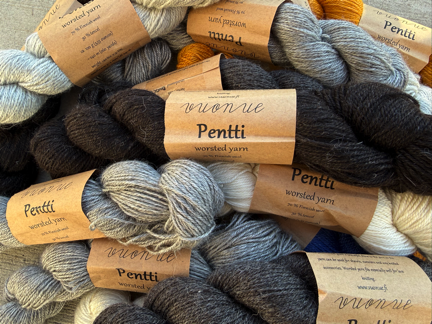
Felting is as much about how the wool was handled before you got it as it is about the wool itself. Put that beautiful yarn to your nose and see if you can smell a sheep farm in your hands. If you can, you have found a beautiful yarn to felt. Here is an amazing pattern to knit yourself a pair of house clogs. You will be amazed how comfortable wool is on your feet! To go along with this pattern, you can check out Vounue Pentti! The natural colors are PERFECT for your next project!
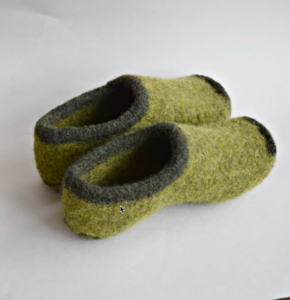
House Clogs
by Cindy Pilon
-
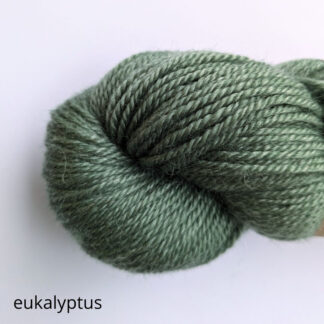
Vuonue Pentti
Price range: $21.00 through $23.00 Select options This product has multiple variants. The options may be chosen on the product page